
Home Backup Generators in Sherwood Park
Our Services
Home Backup Generators
In Sherwood Park and Surrounding Areas
Home backup generators in Sherwood Park are becoming such a smart investment for home owners who want comfort, safety, and peace of mind when the grid goes down.
A backup generator is not just for people who love gadgets or want to be “extra prepared.” It is for home owners who understand that Alberta weather can be unpredictable, outages can happen without warning, and the systems we rely on every day need power to keep running.
Halo Power Solutions helps home owners in Strathcona County, Edmonton, and surrounding areas install reliable generator systems that are designed, wired, permitted, and tested properly. As a Generac Authorized Dealer and service technician, our expert electricians can help you choose the right system for your home, your budget, and the things you absolutely need to keep running.
How Home Backup Generators in Strathcona County Work
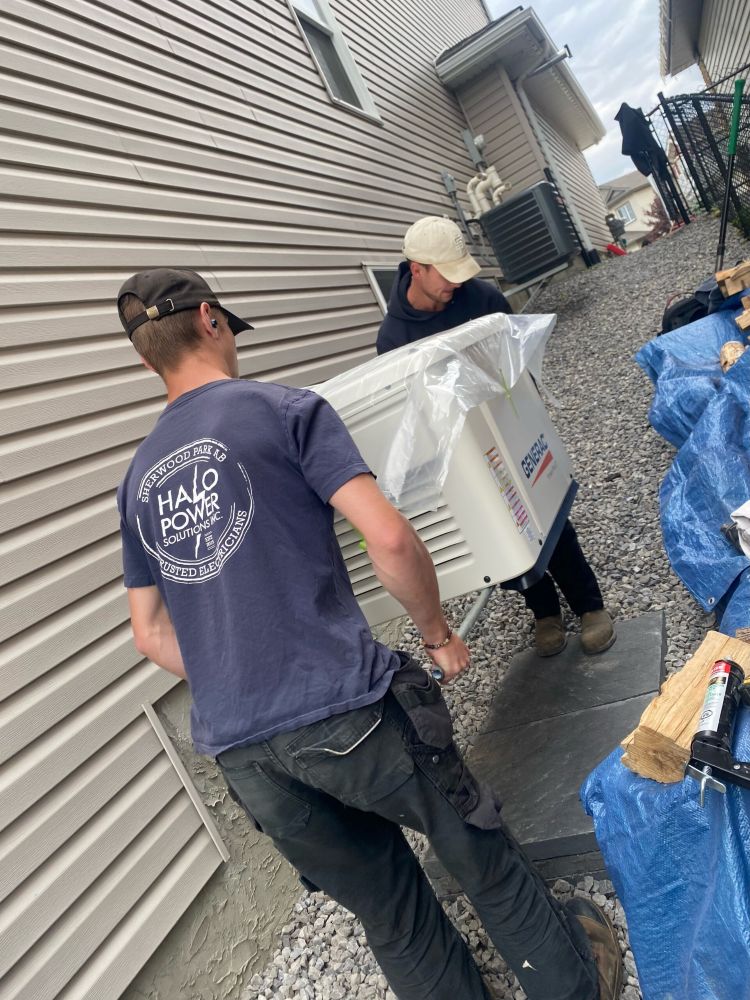
A residential backup generator is designed to provide power when utility electricity fails. The most convenient option is an automatic standby generator, often installed permanently outside your home.
Here is the basic process:
- Utility power goes out: Your home loses power from the grid.
- The automatic transfer switch detects the outage: It then safely separates your home from utility power.
- The generator starts automatically: A standby generator, starts within seconds without you having to go outside.
- Power is transferred to your home: The generator supplies power to selected circuits or most of the home, depending on the system design.
- Power returns: The switch moves your home back to utility power.
- The generator shuts down: The unit turns off and waits for the next outage.
That automatic switch is a big deal. It protects your home, protects utility workers, and allows the system to operate safely. This is why backup generator installation should always be handled by a licensed electrical contractor with generator experience.
Do You Really Need a Backup Generator?
Not everyone needs the same level of backup power, but many families benefit from having a plan.
You may want a backup generator if your home depends on:
- A furnace or heating system during winter
- A sump pump
- A well pump
- Refrigerators or freezers
- Medical equipment
- Security systems
- Internet for work or communication
- Essential lighting
- Garage doors
- Home office equipment
- Basement development or secondary suite systems
Power outages are not always long, but even a short outage can create problems. A freezer full of food can thaw. A sump pump can stop during heavy moisture events. A furnace fan can shut down during extreme cold. If someone works from home, the outage can also stop meetings, deadlines, and client communication.
A generator helps turn a stressful situation into a manageable one.
Backup power is not about panic. It is about protecting the systems your household depends on.
Portable Generator Versus Automatic Standby Generator
Many homeowners start by wondering whether a portable generator is enough or whether they need a permanent standby generator.
Both options can work, but they are very different.
|
Generator type |
Best for |
Things to consider |
|
Portable generator |
Basic emergency power for selected items |
Requires manual setup, fuel handling, outdoor placement, and safe connection |
|
Portable generator with transfer switch |
Essential circuits like furnace, fridge, freezer, sump pump, Wi-Fi, and lights |
More affordable than full standby, but still requires homeowner action |
|
Automatic standby generator |
Whole home or most circuit backup |
Starts automatically, runs on natural gas or propane, and requires professional installation |
|
Generac Guardian system |
Homeowners who want reliable automatic standby power |
Permanent outdoor unit with automatic transfer switch |
A portable generator should never be used indoors, in a garage, or connected to a home with unsafe extension cord setups. Carbon monoxide and electrical backfeed are serious hazards. A proper switch makes portable generator use much safer because it connects selected home circuits in a controlled way.
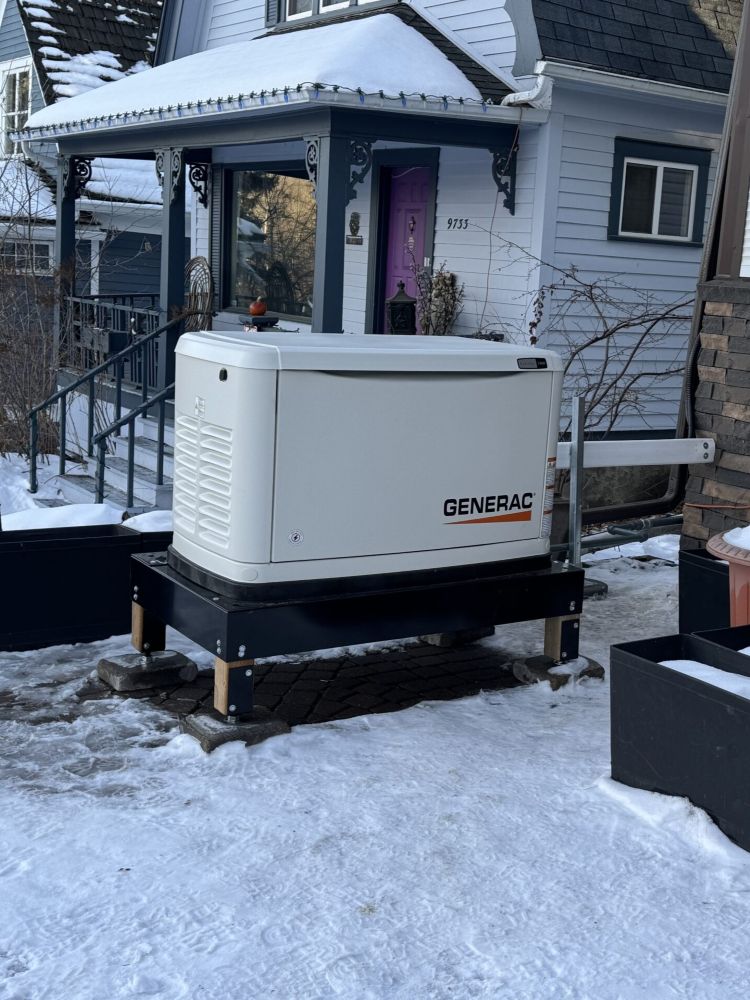
An automatic standby generator is the more seamless option. It is permanently installed outdoors, usually powered by natural gas or liquid propane, and designed to start automatically when your home loses power.
If you travel, work from home, have kids, have aging family members, or simply want the home to keep running without a midnight scramble in the snow, standby power is the cleaner solution.
Why Homeowners Choose Halo Power Solutions
Choosing an electrician is not just about who can show up with tools. It is about who you trust inside your home.
Halo Power Solutions serves Sherwood Park, Edmonton, and surrounding areas with a team that includes licensed master electricians, Red Seal journeyman electricians, and apprentices. The company also carries liability insurance, WCB coverage, and is a member of the Electrical Contractors Association of Alberta.
That matters because electrical installation work needs to be safe, permitted, inspected where required, and completed by people who understand both the technical side and the customer experience.
Halo Power’s approach is built around Safety, Clear communication, Respect for your home, Reliable scheduling, Professional workmanship, Tidy installations, Code compliant electrical work, Honest recommendations, and Long term trust
“My mission is to grow an electrical services company that delivers what other contractors don’t – an amazing, memorable experience for every customer, every time.” – Kevin Staigh, Owner of Halo Power Solutions
What Size Generator Does Your Home Need?
Generator sizing is where homeowners can get tripped up. Bigger is not always better, and smaller is not always cheaper if it fails to power the things you actually need.
A proper generator plan starts with one question:
What must keep running during an outage?
Here are common priorities:
- Furnace fan: Keeps heat moving during cold weather.
- Fridge and freezer: Protects food and reduces spoilage.
- Sump pump: Helps prevent water damage.
- Wi-Fi and basic outlets: Keeps communication and remote work possible.
- Kitchen circuits: Allows for basic cooking and daily function.
- Medical equipment: Supports critical health and safety needs.
- Well pump: Remains highly important for rural properties.
- Security system: Helps maintain home protection during power outages.
Frequently Asked Questions About Home Backup Generators
What is the best backup generator for a home?
The best unit depends on what you want to power. Some homes only need essential circuits like the furnace, fridge, freezer, sump-pump, Wi-Fi, and lights. Others need a larger standby system for most of the home. A professional assessment is the safest way to choose the right size.
Can a backup home generator power my whole house?
Yes, some standby generator systems can power most or all of a home, depending on the size, electrical loads, and setup. Large loads like air conditioning, electric heat, or EV charging need to be factored into the design.
Do backup power systems turn on automatically?
Automatic standby systems ensure the generators run automatically when power fails. The automatic transfer switch detects the outage, starts the generator, and transfers power to the entire home for uninterrupted power.
Do I need a permit for generator installation?
Yes, installations typically require proper electrical permits and inspections. Our licensed electrical contractors can help manage the process so the work is completed safely and correctly.
How often should a home standby generator be serviced?
Most standby generators should be serviced at least once a year. Regular maintenance helps ensure the unit starts, runs, and carries load properly when an outage happens.
Can I use a portable generator instead?
Yes, but it must be used safely. Portable units should be outdoors, away from windows and doors, and connected properly. A transfer switch is much safer than running extension cords through the house.
What fuel does a standby generator use?
Many standby generator solutions run on natural gas or liquid propane. The best option depends on your home, location, fuel availability, and model.
Will I need an electrical panel upgrade first?
Possibly. If your panel is outdated, full, unsafe, or not compatible with the planned generator setup, we may recommend a panel upgrade before or during the installation.
Can a generator protect my home during winter outages?
Yes. A properly sized generator can keep important systems running during cold weather, including the furnace fan, essential lights, fridge, freezer, and communication equipment.
How do I get started?
Contact us to start with an assessment. Our installers can review your home, electrical panel, essential loads, fuel supply options, and backup power goals before recommending the generator options for you to ensure you get power to your entire home.